
What is UGR (Unified Glare Rating)?
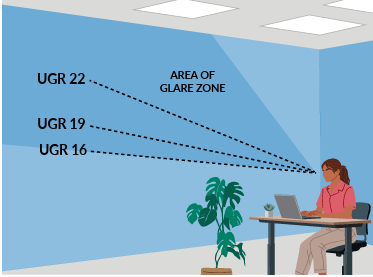
Unified Glare Rating (UGR) is a numerical measure used to evaluate visual discomfort caused by glare from artificial lighting within an indoor environment.
Defined under EN 12464, it helps designers assess how likely a lighting installation is to cause discomfort to occupants based on the brightness of luminaires, background luminance, and the observer’s line of sight.
Understanding the UGR Range
The Unified Glare Rating (UGR) scale ranges from 5 to 40, representing how noticeable and uncomfortable glare can be within an indoor environment.
A lower UGR value indicates minimal or imperceptible glare, while higher values signify increasing visual discomfort.
- In practice, UGR limits can vary depending on the environment and type of task, and the following values are generally recommended as guidance to maintain visual comfort in typical applications:
- UGR ≤10 – Imperceptible glare
- UGR ≤13 – Barely perceptible
- UGR ≤16 – Noticeable but still comfortable
- UGR ≤19 – Just acceptable for office and educational use
- UGR ≤22 – Suitable for craft or light industrial work
- UGR ≤25 – Acceptable for heavy industry
- UGR ≤28 – Tolerable for foyers, railway platforms, or similar open spaces
In practical terms, a UGR under 13 will create no noticeable glare, whereas values above 28 are likely to cause distraction and discomfort.
For most workplaces — particularly offices, classrooms, and computer-based environments — lighting should achieve a UGR below 19 to maintain visual comfort and productivity.
Why UGR Matters in Lighting Application?
Glare control isn’t just about visual comfort — it’s about well-being, productivity, and safety.
A lower UGR value means reduced glare and greater visual comfort — essential for creating productive, safe, and pleasant environments.
Key benefits include:
- Improved comfort and well-being – Low-UGR lighting minimises visual discomfort such as eyestrain, headaches, and fatigue, ensuring a comfortable atmosphere for occupants.
- Enhanced productivity and focus – Reducing glare helps maintain concentration and visual clarity, supporting higher performance in workplaces, schools, and learning spaces.
- Greater safety – By preventing glare-related visual errors, UGR contributes to safer conditions in industrial, healthcare, and technical settings.
- Design consistency and compliance – UGR provides an objective, measurable standard (as defined in EN 12464-1) that helps lighting designers achieve consistent and comfortable illumination across different environments.
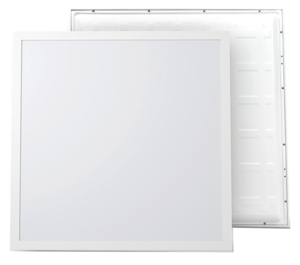
Low Glare LED Panel Prismatic Diffuser

How to Reduce UGR
To minimise glare and achieve a lower UGR, focus on both fixture selection and lighting layout:
- Select low-UGR fittings – Choose luminaires with recessed light sources, diffusers, or anti-glare lenses to soften brightness and limit direct glare.
- Adjust fixture placement – Position lights outside the direct line of sight, increase mounting height, or angle fittings slightly away from occupants.
- Balance illumination – Add uplighting or indirect lighting to raise background luminance and reduce contrast between fittings and surroundings.
- Control brightness – Use dimming, lower wattage, or additional fittings at reduced output to maintain even, comfortable light levels.
At Performance Lighting, we prioritise UGR-compliant designs across our product range. The Carida XLG low-glare LED panel is a perfect example — designed for commercial and educational environments where visual comfort and performance matter most


